

The short answer
Most puppies see a vet several times before 16 weeks, for a health check, deworming and a series of core vaccines given 3 to 4 weeks apart. A visit follows at 6 months, then a booster and adult exam near the first birthday. Your vet sets the exact dates for your puppy and your region, and chooses vaccines such as Lyme, Bordetella and, where it is not already core for your region, leptospirosis by lifestyle and risk. Bring every record from the breeder or shelter, and keep one written log of every vaccine, product and weight.
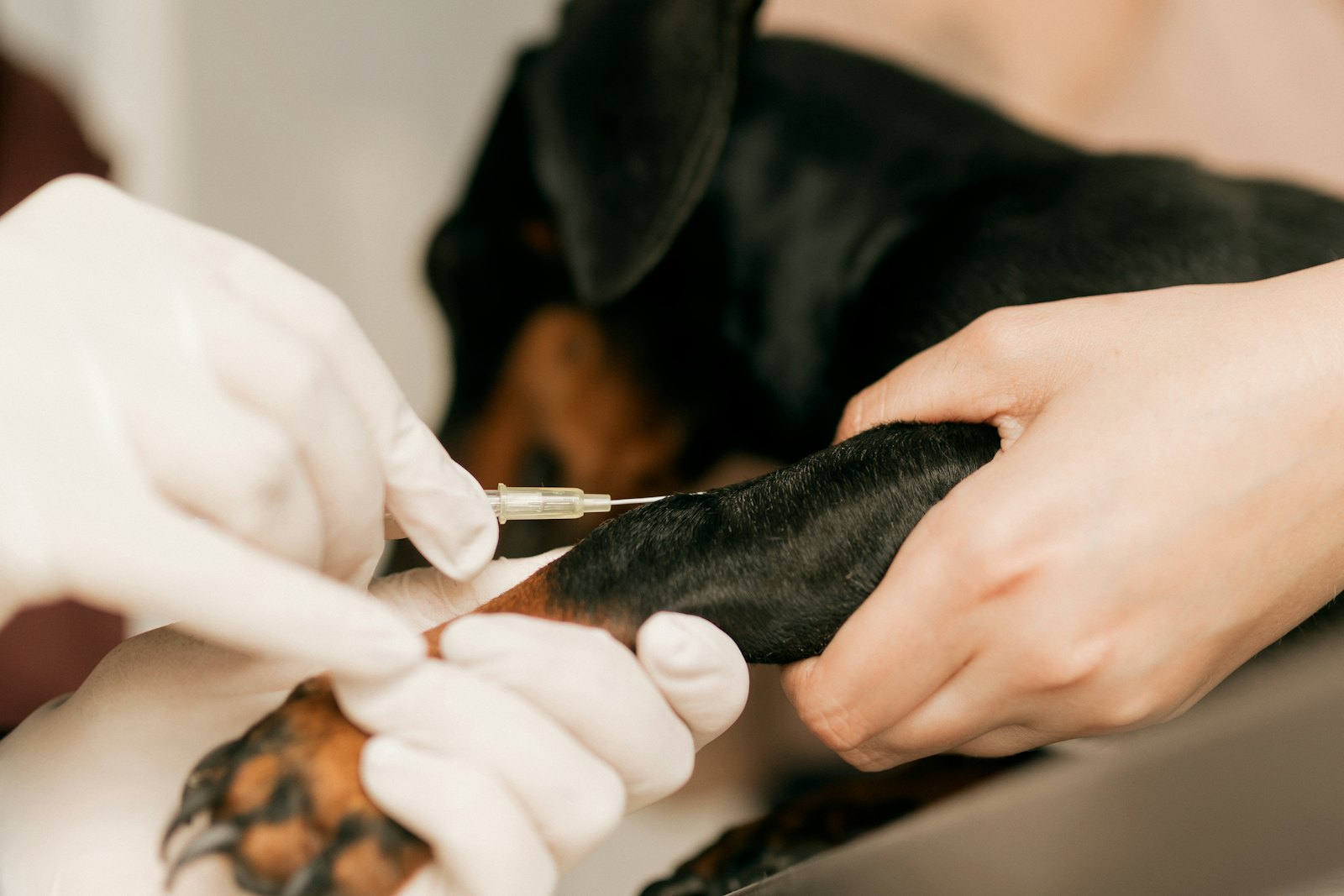
Key takeaways
- The World Small Animal Veterinary Association (WSAVA) says to start core puppy vaccines no earlier than 6 weeks and to repeat them every 3 to 4 weeks until 16 weeks of age. In especially high-risk situations it says to continue to 20 weeks.
- The CVMA kennel code sets the same shape: first vaccine between 6 and 8 weeks, final between 14 and 16 weeks (18 to 20 in higher-risk settings).
- In Ontario, dogs 3 months or older must be vaccinated against rabies (Regulation 567).
- Lyme and Bordetella are non-core. WSAVA lists leptospirosis as core only where the disease is endemic. Your vet recommends these based on where you live and what your dog does.
- The Ontario Veterinary Medical Association (OVMA) lists veterinary care for a puppy’s year at $2,206 or $2,308, depending on the spay or neuter line, before pet insurance. See the table below.
- Book the first visit soon after pickup and check your contract for a vet-exam deadline.
- Early visits shape how your puppy feels about the clinic. Short, calm, treat-rich visits help.
Before the first visit
Book within the first few days after the puppy comes home. Many breeder contracts set a deadline for a first vet exam. The CVMA kennel code recommends that a return policy include an exam by a veterinarian within a set period, and notes that many diseases have an incubation time of two weeks before signs appear. Check your contract and book accordingly. Our guide to choosing a vet and what the first visit covers helps you pick a clinic.
Bring everything you were given: vaccine dates, deworming dates, the microchip number, any health tests on the parents, and the puppy’s food. A fresh stool sample helps the vet check for parasites. Write down your questions in the car so you do not forget them. If your puppy has a PawTrace passport, open the live record on your phone; the vet can read what is labelled as confirmed and what is self-reported. See how to read a puppy passport.
The first-year timeline
The table shows the pattern that Canadian and international guidelines describe. Your vet will adjust it. If your puppy started vaccines with the breeder, the schedule begins from those dates, not from zero.
| Age | Typical focus | Questions to settle |
|---|---|---|
| Within days of pickup | Nose-to-tail exam, weight, records review, parasite check, microchip check | What has been given, and what is due next? |
| 6 to 8 weeks | First core vaccine, deworming. WSAVA: start no earlier than 6 weeks. CVMA: first dose between 6 and 8 weeks. | Which brand, and when is the next dose? |
| 9 to 12 weeks | Booster, deworming if due, discussion of non-core vaccines | Is leptospirosis or Bordetella advised for my puppy? |
| 12 to 16 weeks | Final core vaccine near 16 weeks. Rabies: the CVMA code says a first dose between 3 and 4 months, unless your vet advises otherwise, and Ontario requires it from 3 months. | When can my puppy meet other dogs and visit busy places? |
| 6 months | WSAVA suggests considering a further core dose at 6 months, rather than waiting until 12 to 16 months. Adolescent check, adult teeth, spay or neuter discussion. | What timing suits my puppy’s breed and size? |
| 12 months | Booster, adult exam, weight, dental check, adult-food plan. Rabies revaccination at 1 year per WSAVA. | What does the adult wellness schedule look like? |
Vaccines: core and non-core
WSAVA’s 2024 vaccination guidelines split vaccines into core and non-core. Core vaccines protect against distemper, parvovirus and adenovirus, rabies wherever local law or disease risk requires it, and leptospirosis where it is endemic. The reason for a series is simple: antibodies from the mother can block an early vaccine, so doses continue until 16 weeks of age. After the puppy series, WSAVA recommends revaccinating at 3 years and then no more often than every 3 years for the distemper, parvovirus and adenovirus core group. The CVMA code says a booster one year after the final puppy vaccine, then on a schedule your vet recommends.
| Vaccine | Type | What the guidelines say (WSAVA 2024) |
|---|---|---|
| Distemper, parvovirus, adenovirus | Core | Start from 6 weeks, repeat every 3 to 4 weeks to 16 weeks. Revaccinate at 3 years, then no more often than every 3 years. |
| Rabies | Core where law or disease risk requires it | Follow local law first. Revaccinate at 1 year. A 1-year or 3-year product may be used. In Ontario, required for dogs 3 months or older. |
| Leptospirosis | Core where disease is endemic, otherwise by risk | First dose from 8 weeks, second 2 to 4 weeks later, then annually. |
| Lyme (Borrelia) | Non-core | Two doses 2 to 4 weeks apart from 8 weeks, then annually before tick season. WSAVA: “generally recommended only for use in dogs with a known high risk of exposure”. The mainstay of prevention is tick control. |
| Bordetella and parainfluenza | Non-core | Intranasal and oral forms protect after a single dose, then annual boosters. Ask your vet whether your puppy needs it before classes, daycare, grooming or boarding. |
Rabies rules: Ontario Regulation 567 requires dogs 3 months or older to be vaccinated. Other provinces and municipalities set their own rules, so ask your vet. Proof of rabies vaccination is also what you need to show at a border; our vaccination schedule guide goes deeper on the series.
Parasite control through the year
Fleas, ticks, intestinal worms and heartworm vary by region and season. Public Health Ontario publishes Lyme disease risk information, and the Companion Animal Parasite Council (CAPC, U.S.) publishes tick and parasite guidance, including prevalence maps. Neither replaces your vet: ask which products to use and for which months where you live. Our guides to parasite prevention through the Canadian seasons and ticks, Lyme and heartworm cover the regional detail. Fecal tests and deworming appear in the OVMA puppy budget below, which tells you vets expect them.
Spay or neuter timing
Timing depends on breed, size and sex, and recommendations have moved over time. Do not copy a number from a forum. Ask your vet at the 6 month visit or sooner, and read our guide to spay and neuter timing by breed size for the questions to ask. The OVMA 2025 puppy budget lists the procedure at $1,016 and $1,118 for the two sexes.
What the first year costs at the vet
The OVMA publishes an annual cost of owning a puppy for Ontario, based on provincial averages. The veterinary lines are below. Costs vary by clinic.
| Item (OVMA 2025, puppy, first year) | Amount |
|---|---|
| Exams with vaccines | $642 |
| Parasite prevention | $189 |
| Deworming medication | $91 |
| Fecal exams | $131 |
| Microchip | $137 |
| Neuter or spay | $1,016 / $1,118 |
| Pet insurance (OVMA estimate) | $1,402 |
Many clinics sell puppy wellness packages that spread routine costs across the year. A wellness plan is not insurance. Insurance pays for unexpected illness and injury, and a policy can exclude conditions noted before coverage starts. Our guides on wellness plans vs pet insurance and pre-existing conditions show how to compare them before the first visit, and how much a puppy costs in Canada gives the full picture.
Questions worth asking your vet
- Which non-core vaccines does my puppy need here, and why?
- Which parasite products do you recommend, and for which months?
- What should my puppy weigh at each visit, and what is a healthy body condition?
- When do you recommend spay or neuter for this breed and size?
- Which signs mean I should phone you the same day?
- Do you offer a puppy plan, and how does it compare with insurance?
- When can my puppy go to classes, daycare and dog parks?
Socialisation does not wait for the last vaccine
WSAVA’s vaccination table notes that careful socialisation can begin before the vaccine series is complete. Puppies have a sensitive period for socialisation, so your vet can help you plan safe exposure: private homes with vaccinated dogs, carrying your puppy through busy places, and a good puppy class. Our guides on puppy kindergarten and early socialization programs breeders use explain what to look for. For the day-to-day basics, start at our new puppy hub.
Making visits low stress
The first year is when your puppy learns how it feels about the clinic. Bring high-value treats, arrive hungry, and ask whether you can wait outside until the room is ready. Practise handling at home: lift a paw, look in an ear, lift a lip, then treat. Many clinics welcome short social visits where the puppy is weighed and fed. If your puppy is very frightened, tell the vet early. A slower plan now can help prevent a lasting fear.
Call the vet between visits
Do not wait for the next appointment if your puppy vomits or has diarrhea more than once, stops eating, is lethargic, coughs, has trouble breathing, or may have eaten something toxic. Parvovirus is a serious risk for puppies that are unvaccinated or part-way through the series. See our guide to emergency signs every owner should know.
Myth vs fact
| Myth | Fact |
|---|---|
| One vaccine at the breeder’s protects my puppy. | Early doses can be blocked by maternal antibodies. WSAVA recommends repeating doses to 16 weeks. |
| Every dog needs every vaccine. | Core vaccines are for all dogs. Lyme and Bordetella depend on risk and lifestyle, and leptospirosis is core only where it is endemic. |
| Rabies is only needed for travel. | Ontario requires it for dogs 3 months or older. |
| A wellness plan is insurance. | It spreads routine costs. Insurance covers unexpected illness and injury. |
| The vet visit ends once the puppy shots are done. | Plan a 6 month check, a 12 month adult exam and then regular wellness visits. Older dogs need more; see senior dogs: what changes after age seven. |
Questions people ask
Why does my puppy need several rounds of vaccines?
Antibodies from the mother can block a vaccine in a young puppy. A series to 16 weeks gives a dose the chance to work after those antibodies fade. WSAVA suggests considering a further dose at 6 months for puppies that did not respond earlier.
Is rabies vaccination required in Canada?
It is required by law in Ontario for dogs 3 months or older, and other provinces and municipalities set their own rules. Your vet will know the local rule.
When can my puppy go to the dog park?
Ask your vet. The date depends on the vaccine series your puppy received and local disease risk.
What is a core vaccine?
A vaccine that protects against widespread or severe disease: distemper, parvovirus and adenovirus, rabies where law or risk requires it, and leptospirosis where it is endemic.
Can I keep my own record?
Yes. Keep a single log of every vaccine, product, date and weight. Boarding, daycare, groomers, travel and insurance claims all ask for it.
Keep reading
- Vaccination schedule for Canadian puppies
- Choosing a vet and what the first visit covers
- Wellness plans vs pet insurance
- Puppy kindergarten: when to start and what to expect
Sources
All external sources checked October 2026.
- WSAVA: Core and non-core vaccines for pet dogs, per the 2024 guidelines (table)
- CVMA: Code of Practice for Canadian Kennel Operations (3rd ed.), vaccination requirements
- Ontario Regulation 567: Rabies Immunization
- OVMA: Cost of Care, Canine 2025
- Public Health Ontario: Lyme disease
- Companion Animal Parasite Council (U.S.): ticks
Keep reading