

The short answer
Several Canadian charities place a future guide or service dog puppy with a volunteer family from 8 or 9 weeks of age until the dog starts formal training, 8 to 18 months later depending on the program. Lions, CNIB Guide Dogs, BC & Alberta Guide Dogs and Mira state that they cover the puppy’s food and vet care, and each charity trains its volunteers. A few also release dogs that leave training as pets. Which program you can join depends on where you live: each one names the cities or regions it serves. This guide covers Lions Foundation of Canada Dog Guides, Canadian Guide Dogs for the Blind, CNIB Guide Dogs, BC & Alberta Guide Dogs, Mira and Dogs With Wings. PawTrace is not affiliated with any of them.
Quick highlights
- Several charities place a puppy with a volunteer family from 8 or 9 weeks of age.
- Formal training starts 8 to 18 months later, depending on the program.
- Lions, CNIB Guide Dogs, BC & Alberta Guide Dogs and Mira state that they cover the puppy’s food and vet care.
- Each program names the cities or regions it serves, so where you live decides which one you can join.
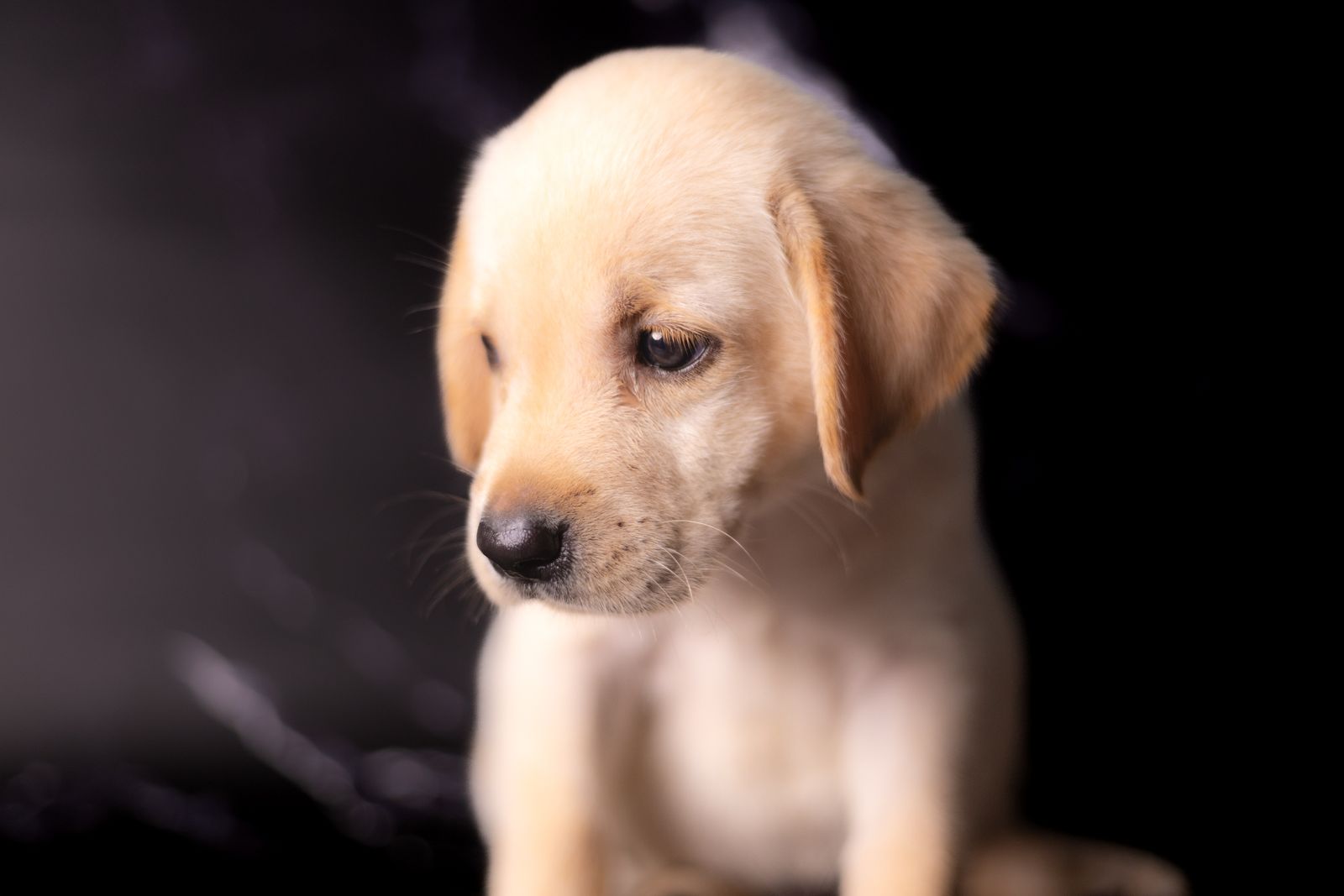
Key takeaways
- Puppy raising is volunteer work. The family socialises the puppy and teaches house manners and basic obedience. The charity’s instructors do the guide or service dog training later.
- Programs name their own limits. Lions Foundation of Canada Dog Guides accepts foster families within 75 minutes of its Oakville or Breslau facilities. Canadian Guide Dogs for the Blind places puppies in the Ottawa area, east-end Toronto, Trenton and Kingston.
- Time in the home depends on the charity: 8 to 12 months for a full journey at Dogs With Wings, up to 16 months at Lions, and 12 to 18 months at Canadian Guide Dogs for the Blind and Mira.
- Lions states that all vet, food and training expenses are covered. CNIB Guide Dogs, BC & Alberta Guide Dogs and Mira also state that they cover or provide food and vet care.
- Not every puppy becomes a working dog. Five of the charities checked describe a route to adopt a dog that leaves training, and each sets its own process and cost.
- Career change dogs are not free everywhere. Canadian Guide Dogs for the Blind lists a price of $2,000 plus HST (subject to change). Dogs With Wings lists fees of $3,000 to $5,000 by the dog’s age, less $1,000 for eligible adopters.
- The charity pages we read list no puppy raising location in New Brunswick, Prince Edward Island, Newfoundland and Labrador, Yukon, the Northwest Territories or Nunavut.
What fostering a guide or service dog puppy involves
Charities use several names for the same volunteer job: foster, puppy raiser, puppy walker. In each program the puppy lives in your home as a family dog in training. Lions and BC & Alberta Guide Dogs state that they breed their own puppies. Lions describes the role as providing a home and helping to socialise a puppy, “teaching them house manners and basic obedience in preparation for formal training as a Dog Guide.” Mira says foster families “are not instructors”: their job is to care for the puppy during its socialisation period.
A news report in the Wellington Times (May 21 2026) on the Lions program says one foster receives the puppy “at about seven or eight weeks old.” The Lions Foundation’s own foster page lists the details below. Its FAQ says puppies are taken in by foster families “for the first year” and that “at about one year old, the dog returns to Oakville and begins formalized Dog Guide training.”
Puppy placement at each charity
| Charity | Puppy arrives | Time with the family | What the charity states it provides | Who can apply |
|---|---|---|---|---|
| Lions Foundation of Canada Dog Guides | “about seven or eight weeks old” (one foster, Wellington Times, May 21 2026) | Up to 16 months (foster page) | “All vet, food and training expenses”; online and in-person classes; poodle fosters pay for grooming | Families within 75 minutes of the Oakville or Breslau (Kitchener-Waterloo and Guelph area) training facilities; a current police record check |
| Canadian Guide Dogs for the Blind | “approximately 8 weeks of age” | 12 to 18 months | Supervision by staff and monthly meetings; the page we read does not list expenses | Age 18 or older; one adult home most of the day or allowed to take the dog to work or school; own transport; Ottawa (2 hour radius), east-end Toronto, Trenton, Kingston |
| CNIB Guide Dogs | 8 weeks | 12 to 15 months (raiser); 8 weeks to 6 months (starter); 6 months to 12 to 15 months (finisher) | “All necessary veterinary care, equipment, and food”; a Puppy Raising Supervisor; volunteer boarders on occasion | Age 18 or older; vehicle; home assessment; an Enhanced Police Information Check (CNIB covers the cost); Vancouver, Victoria, Calgary, Winnipeg, Toronto area, Kingston, Carleton Place, Ottawa, Halifax |
| BC & Alberta Guide Dogs | Not stated on the page | 12 to 16 months | All food, vet care and supplies; training manual; obedience classes; vacation coverage | Must be able to take the puppy to work; Metro Vancouver, Victoria, Parksville, Calgary, Edmonton |
| Mira (Quebec) | 9 weeks | 12 to 18 months | Food, veterinary care at the Mira clinic, accessories, an identification letter | Age 18 or older; an average of 10 mandatory appointments in Sainte-Marie-Madeleine; puppy not left alone for more than 4 hours a day |
| Dogs With Wings (Alberta) | Not stated on the page | 8 to 12 months (full journey); also 1 to 3 month and 4 to 6 month roles | Not stated on the volunteer page we read | Volunteers “across Alberta and Western Canada”; based in Edmonton |
Two details deserve a note. First, the charity stays the owner. Mira says it “remains the owner of the puppy and reserves the right to take it back at any time if its safety or development is at risk.” Second, giving the puppy back is part of the job. CNIB lists being able to “cope with giving the puppy back at 12-15 months of age” as a requirement.
What the family must do
- Take the puppy out. Programs expect daily socialisation: quiet streets first, then shops, restaurants, public transit and elevators. Canadian Guide Dogs for the Blind encourages volunteers to take the dog “nearly everywhere” they go.
- Attend sessions. Lions runs classes online and in person. Canadian Guide Dogs for the Blind asks for monthly meetings with a program supervisor during business hours. CNIB asks for a weekly one-to-one session in the first 4 weeks, then monthly sessions.
- Check your schedule. BC & Alberta Guide Dogs answers “No” to raising a puppy if you cannot take the dog to work, because the puppies grow into working dogs that go nearly everywhere with their handlers.
- Pass a home check. Lions arranges a home visit after your application. CNIB staff complete a home assessment. Lions requires a current police record check, and CNIB an Enhanced Police Information Check, which CNIB pays for.
- Plan for other pets. BC & Alberta Guide Dogs recommends that any other dog in the home is at least 2 years old, and Mira says you can foster with a pet at home. CNIB requires pets in the home to be friendly and fully vaccinated.
- Expect an adult-sized dog. Lions lists retrievers, Labradors and standard poodles as its puppy breeds, and BC & Alberta Guide Dogs says its dogs “will be about 50 to 90 pounds when fully grown.”
What it costs the charity and the family
The Lions Foundation’s FAQ states: “It costs $35,000 to breed, train and match a Dog Guide, however all Dog Guides are provided at no cost to qualified applicants.” The Wellington Times report states: “It costs about $35,000 to fully train a dog to be placed with a person or family in need.” The same report says the dog’s food is provided by a corporate sponsor and routine vet bills are also covered. BC & Alberta Guide Dogs states that it “takes up to 2 years and costs our charity up to $35,000 to produce each certified” Autism Service Dog, and Mira lists $35,000 as the average cost it covers for training a guide or service dog.
For the foster family, Lions states that all vet, food and training expenses are covered, and that poodle fosters pay for grooming. CNIB states that it covers the costs of all necessary veterinary care, equipment and food. Ask each charity in writing what it covers before you apply: the Canadian Guide Dogs for the Blind page we read does not list expenses.
How to apply
- Pick a program that serves your address. Use the table above. Lions asks for a home within 75 minutes of Oakville or Breslau. The Ottawa-area programs are Canadian Guide Dogs for the Blind (Manotick) and CNIB Guide Dogs (Ottawa and Carleton Place).
- Go to an information session, where one is offered. Lions lists foster information sessions on Mondays at 6:00 pm Eastern; check its page for current dates. Canadian Guide Dogs for the Blind asks applicants to attend a 60-minute virtual information session, or phone (613) 692-7777.
- Submit the form. Lions: application form or puppyprogram@dogguides.com. CNIB: expression of interest form. BC & Alberta Guide Dogs: puppy raiser interest form or puppyraising@bcandalbertaguidedogs.com. Mira: a detailed form, then an in-person preliminary meeting in Sainte-Marie-Madeleine.
- Prepare for the home visit or assessment. Expect questions about your household, other pets, work hours and dog experience.
- Wait for a match. Each charity decides placements. None of the pages we read promises a puppy to every approved applicant.
Adopting a career change dog
Charities assess every dog. A dog may leave the program because of temperament, health or retirement, and the charity may then offer the dog as a pet. Programs call these dogs career change, unselected or released dogs. The routes differ a great deal.
- Lions Foundation of Canada Dog Guides (Ontario). Its page says some dogs lack the temperament for the work, some drop out for health reasons and others retire. Read the Discovery Package, submit a new application (an application is active for one year), then submit a Statement of Interest for a specific dog listed on the page. A Statement of Interest is not valid without an active application. The page does not state a fee.
- Canadian Guide Dogs for the Blind (Ontario). The applicant list “rarely opens.” It opens on the first business day of the month at 8:30 am Eastern, by telephone only, for a few minutes. Buyers must live within 200 km of the National Training Centre in Manotick. Dogs are “generally 14-18 months old,” always spayed or neutered, and sold for $2,000 plus HST (subject to change). An adult must be home during the day and the dog needs a secure yard or area.
- CNIB Guide Dogs. The page says a dog that suits none of its four career streams (guide dog, buddy dog, ambassador dog, brood or stud dog) may be offered to another service dog organization or become available for adoption as a pet. It points to a separate page on adopting a career change pet dog.
- Mira (Quebec). Complete the form on its page. Mira says unselected dogs are adopted for a donation it sets, which varies with the dog’s training and health and includes spaying or neutering and vaccinations. In most cases the family that fostered the dog has priority.
- Dogs With Wings (Alberta). Its adoption page lists fees by age at adoption: $5,000 for 13 months and older, $4,000 for 7 to 12 months and $3,000 for 0 to 6 months, with a $1,000 discount under its medical needs or volunteer discount (the two cannot be combined). Apply through the online form. Dogs With Wings is based in Edmonton.
- BC & Alberta Guide Dogs. Its FAQ says it finds suitable homes for dogs that do not qualify, and occasionally places retired dogs. We found no public application process for these dogs on its site.
A career change dog is a young adult dog, not a puppy. Budget for training, exercise and vet care as for any dog. If you want a dog from a shelter or rescue instead, read our guide to adopting a dog in Ottawa.
Programs across Canada
| Program | Province or region served | Foster or puppy raising | Career change adoption | Link |
|---|---|---|---|---|
| Lions Foundation of Canada Dog Guides | Ontario (Oakville and Breslau; fosters within 75 minutes) | Yes | Yes | dogguides.com |
| Canadian Guide Dogs for the Blind | Ontario (Manotick; Ottawa 2 hour radius, east-end Toronto, Trenton, Kingston) | Yes | Yes, within 200 km of Manotick; list rarely opens | guidedogs.ca |
| CNIB Guide Dogs | British Columbia, Alberta, Manitoba, Ontario, Nova Scotia (cities listed on its page) | Yes | Yes | cnib.ca |
| BC & Alberta Guide Dogs | British Columbia and Alberta | Yes | Finds homes for dogs that do not qualify (FAQ); no public application found | bcandalbertaguidedogs.com |
| Mira | Quebec (Sainte-Marie-Madeleine) | Yes | Yes (unselected dogs) | mira.ca |
| Dogs With Wings | Alberta (based in Edmonton) | Yes | Yes | dogswithwings.ca |
Ontario has three programs on the list. For Ottawa readers, the two nearest are Canadian Guide Dogs for the Blind in Manotick and CNIB Guide Dogs.
The Walk for Dog Guides
The Lions Foundation holds an annual fundraising walk, the Walk for Dog Guides. The official walk page states: “Join us on May 30, 2027 to help restore independence and transform lives across Canada.” Registration and donation links are on the walk page. Other charities in this guide run their own events.
Myth vs fact
| Myth | Fact |
|---|---|
| Fostering a guide dog puppy is the same as fostering a rescue dog. | The puppy is placed to prepare for formal training and returns to the charity after 8 to 18 months, depending on the program. Mira states that it stays the owner of the puppy. |
| Anyone in Canada can foster for any program. | Each program names the places it serves. Lions asks for a home within 75 minutes of Oakville or Breslau, and Mira asks families to attend an average of 10 appointments in Sainte-Marie-Madeleine. |
| Every foster puppy becomes a guide dog. | Charities assess each dog. Some leave the program for temperament or health reasons and may be offered as pets. |
| Career change dogs are free. | Prices and donations range from $2,000 plus HST at Canadian Guide Dogs for the Blind to $3,000 to $5,000 at Dogs With Wings (less $1,000 for eligible adopters). Mira sets a donation. Lions does not state a fee on its page. |
| You pay for the puppy’s care. | Lions states that vet, food and training expenses are covered, and CNIB Guide Dogs, BC & Alberta Guide Dogs and Mira state they cover or provide food and vet care. Poodle fosters at Lions pay for grooming. |
Frequently asked questions
How old is the puppy when it comes to a foster family?
Canadian Guide Dogs for the Blind and CNIB Guide Dogs place puppies at 8 weeks, and Mira places them at 9 weeks. A Wellington Times report (May 21 2026) says one Lions foster receives puppies “at about seven or eight weeks old.”
How long do I keep the puppy?
The charities state 12 to 18 months at Canadian Guide Dogs for the Blind and Mira, 12 to 15 months at CNIB, 12 to 16 months at BC & Alberta Guide Dogs, up to 16 months at Lions and 8 to 12 months for a full journey at Dogs With Wings.
Do I pay for food and vet bills?
Lions states that all vet, food and training expenses are covered by the Foundation, and poodle fosters pay for grooming. CNIB lists all necessary veterinary care, equipment and food, BC & Alberta Guide Dogs lists all food, vet care and supplies, and Mira lists food, veterinary care and accessories. Ask the other charities what they cover before you apply.
Can I foster a guide dog puppy in Ottawa?
Yes. Canadian Guide Dogs for the Blind lists Ottawa, Ontario (2 hour radius) among its active areas, and CNIB Guide Dogs lists Ottawa and Carleton Place. Lions accepts families within 75 minutes of its Oakville or Breslau facilities.
Can I keep the puppy if it does not become a working dog?
It depends on the charity. Mira says the family that fostered the dog has priority in most cases. Lions, Canadian Guide Dogs for the Blind and CNIB describe separate applications for career change dogs. Ask the charity about its policy before you start.
Is this the same as adopting from a shelter?
No. A shelter or rescue adoption has no formal training program behind it. Read our adoption guide for that route.
Last reviewed October 23 2026. General information, not legal or veterinary advice. Programs change their rules, locations and fees: confirm every detail with the charity before you apply. PawTrace is not a partner of, and does not endorse, any charity named here.
Already have a dog? Find trainers, groomers and other local help in our dog services directory.
Keep reading
- Adopting a dog in Ottawa
- New puppy hub
- Crate training without tears
- Vaccination schedule for Canadian puppies
- Choosing a vet and what the first visit covers
Sources
- Lions Foundation of Canada Dog Guides: Foster Puppy Program (checked October 23 2026)
- Lions Foundation of Canada Dog Guides: Adopt a Career Change Dog (checked October 23 2026)
- Lions Foundation of Canada Dog Guides: FAQs ($35,000 cost; first year with foster families) (checked October 23 2026)
- Walk for Dog Guides: official page (May 30, 2027) (checked October 23 2026)
- Wellington Times: Lions Foundation Dog Guides (May 21 2026) (checked October 23 2026)
- Canadian Guide Dogs for the Blind: Puppy Raising Program (checked October 23 2026)
- Canadian Guide Dogs for the Blind: Career Change Dogs (checked October 23 2026)
- CNIB Guide Dogs: Volunteer role, puppy raiser (checked October 23 2026)
- CNIB Guide Dogs: Volunteer with CNIB Guide Dogs (checked October 23 2026)
- CNIB Guide Dogs: program page (career change dogs) (checked October 23 2026)
- BC & Alberta Guide Dogs: Volunteer, raise a puppy (checked October 23 2026)
- BC & Alberta Guide Dogs: FAQs (checked October 23 2026)
- Mira: Become a foster family (checked October 23 2026)
- Mira: Adopt an unselected dog (checked October 23 2026)
- Dogs With Wings: Adoption (Very Important Pets) (checked October 23 2026)
- Dogs With Wings: Volunteer (puppy raising roles) (checked October 23 2026)
- Mira: home page ($35,000 average cost) (checked October 23 2026)
Keep reading